Dimensional Tolerance
±0.01 mm
Achieved with tooling and parameters developed specifically for gummy materials, plus real-time thermal compensation.
Rapid Model offers custom copper alloy components. Services cover rapid prototyping and mass production. Expert processing techniques ensure optimal performance for critical applications. Global shipping is available with express options.
Achieved with tooling and parameters developed specifically for gummy materials, plus real-time thermal compensation.
Critical for electrical contacts, RF shielding and high-vacuum sealing surfaces. Super-mirror down to Ra 0.05 µm on request.
Full material certification for C10200, C36000 and the rest of the range, with 100% conductivity testing on critical parts.
Specialised solutions for high-conductivity, thermal management and complex corrosion-resistant copper components.
Machining busbars, connectors and terminals to strict tolerances while holding above 98% IACS conductivity.
Producing complex heat sinks, cold plates and spreaders with optimised fin geometry and flatness.
Fast-turn CNC prototyping for RF components, waveguides and EDM electrodes in 2–5 days.
Efficient production of brass fittings, plumbing components and decorative hardware with consistent quality.
5-axis capability for complex one-piece copper components such as induction coils and nozzle blocks.
Stock and machining expertise across high-conductivity copper, free-cutting brass, cartridge brass, tin bronze and aluminium bronze.
Explore our precision-machined copper alloy components and get your custom copper parts.
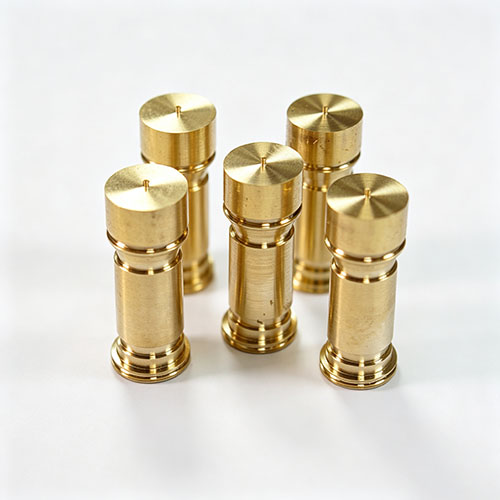
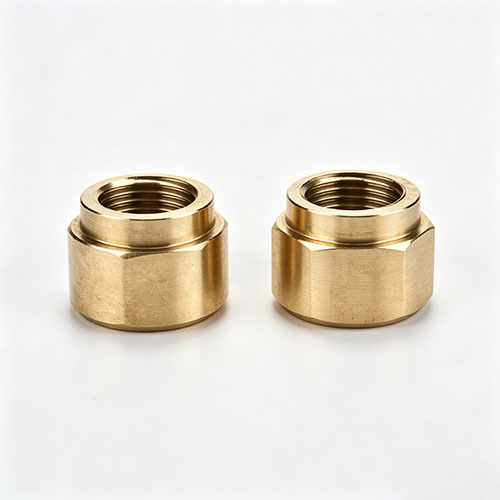
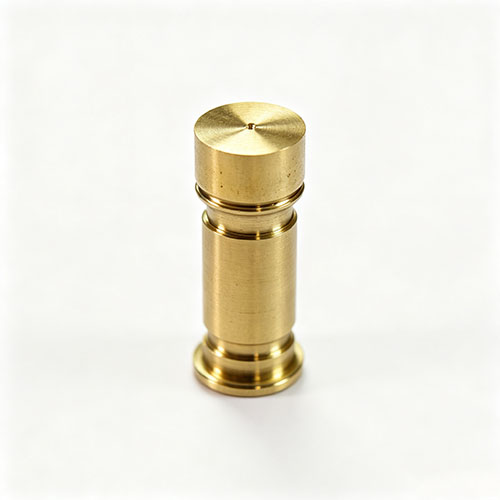
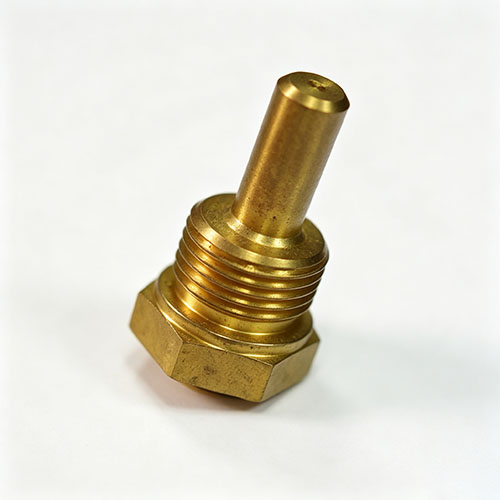
Six of the most widely used copper materials in CNC machining, selected for conductivity, machinability, strength and wear resistance.
We use specialised techniques and tooling to overcome the challenges of machining copper alloys — material gumminess and heat sensitivity — and deliver precision components with clean surface quality.
Sharp, polished tooling and high-speed strategies to prevent material adhesion and achieve fine finishes on electrical and thermal components.
Expert turning of rod and bar into connectors, fittings and shafts, with live tooling for cross-drilling and milling features.
Post-machining services including polishing, plating in nickel, silver, gold or tin, passivation and anti-tarnish treatments.
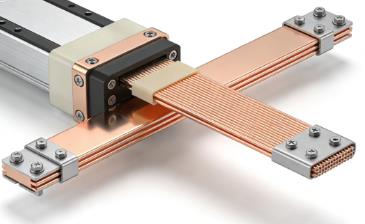
The main challenge was holding extreme dimensional accuracy across a large, thin copper plate while preserving its maximum electrical conductivity. Any excess heat input or work hardening during machining degrades conductivity. On top of that, the long narrow slots for the power modules needed absolute precision and burr-free edges to prevent short circuits.
We combined sharp, polished carbide end mills with a high-speed, low-depth-of-cut milling strategy to minimise heat and work hardening. The part was fixtured on a custom vacuum plate to avoid clamping distortion. A final in-machine deburring pass with a specialised tool left every slot edge smooth and safe, and post-machining conductivity testing confirmed above 99% IACS retention.
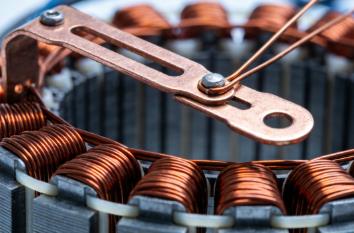
The raw copper hairpins are bent into complex 3D shapes after machining. The challenge was to machine the precise mating features — chamfers, slots and profiles — on the ends of the soft rectangular copper bar before the bending process, positioned accurately enough that every hairpin would still align correctly in the stator stack once bent.
We developed a dedicated multi-stage fixture that held the rectangular bar at the exact datum points used by the bending machine. Using synchronised 3+2 axis machining, both ends were cut in a single setup, which guaranteed symmetry and positional accuracy. Tool geometry was chosen specifically to avoid burrs that would interfere with the downstream insulation process.
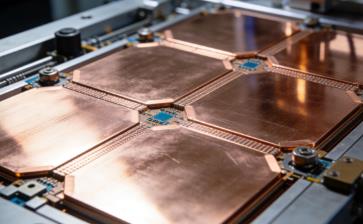
The part needed a surface finish of Ra below 0.05 µm across large flat areas, which is extremely demanding on soft ductile copper because it scratches easily and shows every tool mark. The part also had to be completely free of oils, fingerprints and embedded particles to avoid contamination inside a high-vacuum semiconductor tool.
Machining ran in a controlled clean area using single-crystal diamond turning tools on an ultra-precision lathe, achieving the mirror finish directly from the machine and minimising post-processing. Only high-purity semi-aqueous coolants were used, fully removed in a multi-stage ultrasonic clean, followed by vacuum baking and Class 100 cleanroom packaging.
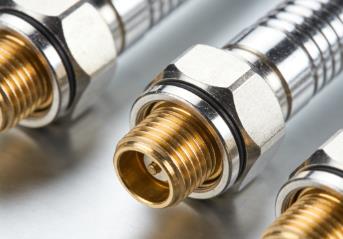
The part needed extremely precise internal diameters and surface finishes to maintain a specific characteristic impedance. Drilling deep, small-diameter holes in brass at a high length-to-diameter ratio risked tool deflection and poor finish. Any internal scratch or diameter variation causes signal reflection and loss, degrading performance at GHz frequencies.
We combined gun drilling for straightness in the deep holes with precision boring and honing to reach the final diameter and finish, all tightly controlled by in-process gauging. Internal surfaces were micro-polished before nickel plating to give a flawless, low-loss conductive path, and impedance testing on sample parts verified performance before release.
Compare conductivity, machinability, strength and corrosion resistance to pick the right copper alloy for your application.
| Copper Alloy | Conductivity (% IACS) | Machinability Rating | Typical Strength | Primary Applications |
|---|---|---|---|---|
| C11000 (ETP Copper) | >100% | 20% (gummy) | Medium | Busbars, electrical contacts, heat sinks |
| C10100 (OFC) | >101% | 20% | Medium | Semiconductors, high-vacuum, particle accelerators |
| C36000 (Free-Cutting Brass) | ~28% | 100% (reference) | Good | Fittings, valves, precision screw machine parts |
| C26000 (70/30 Brass) | ~28% | 30% | Medium-High | Ammunition components, fasteners, decorative hardware |
| C93200 (Bearing Bronze) | ~12% | 70% | High | Bearings, bushings, washers (SAE 660) |
| C95400 (Aluminum Bronze) | ~13% | 20% (tough) | Very High | Heavy-duty gears, marine hardware, wear plates |
| Alloy | Common Tempers / Conditions | Yield Strength (MPa) Typical | Machining Advice |
|---|---|---|---|
| C11000 / C10100 | H02 (½ hard), H04 (hard) | 250–350 | High speeds, sharp tools. Use H04 for cleaner chip breaking. |
| C36000 | H02 (½ hard) | 200–310 | Industry standard for machinability. Excellent surface finish. |
| C26000 | H02 (½ hard), annealed | 110–380 | Prone to stringy chips; requires chip breakers. Great for cold forming. |
| C93200 | As cast / M07 | 125–170 | Contains lead for self-lubrication; machines very well. |
| C95400 | As cast, heat treated (TQ50) | 300–500 | Very tough and abrasive. Requires carbide tooling and rigid setups. |
| Copper Alloy | Polishability | Nickel Plating | Silver / Gold Plating | Notes |
|---|---|---|---|---|
| C11000 / C10100 | Excellent | Excellent | Excellent | High purity allows superior electroplating adhesion. |
| C36000 / C26000 | Excellent | Excellent | Excellent | Commonly used for decorative finishes. C26000 is more ductile. |
| C93200 (Bronze) | Good | Fair | Fair | Porous nature can affect plating; often used bare with oil. |
| C95400 (Al-Bronze) | Fair | Poor | Poor | Naturally forms a protective alumina layer; hard to plate. |
| Design Factor | General Guideline | High-Precision Guideline | Reasoning & Recommendation |
|---|---|---|---|
| Minimum Wall Thickness | 0.5 mm | 0.8 mm | Pure copper is soft; C95400 is tough but needs rigidity. |
| Internal Sharp Corners | R ≥ 0.5 mm | R ≥ 1.0 mm | Reduces burr formation in ductile alloys such as C11000 and C26000. |
| Thread Depth | 1.5 × dia | 2.5 × dia | C36000 taps easily; C95400 requires heavy-duty taps. |
| Hole Tolerance | ±0.05 mm | H7 / G6 | Essential for C93200 bearing press-fits to ensure correct clearance. |
Material Selection Tip
Choose C11000 / C10100 for maximum electrical and thermal conductivity.
Where conductivity is secondary and the geometry is complex, C36000 brass
offers the lowest cost because it machines at high speed.
Wear Resistance
C93200 is the go-to for standard bushings because of its anti-friction
properties. For high-load, high-impact environments, C95400 aluminium bronze
provides superior mechanical strength and corrosion resistance.
Manufacturing Note
Pure coppers (C11000 / C10100) are gummy during CNC milling, so expect higher
deburring cost than on C36000.
Our dedicated process for copper components ensures expert handling from initial design review through final inspection, so parts meet your electrical, thermal and mechanical specifications.
Upload your drawings for pricing and a copper-specific manufacturability review.
We confirm the grade, temper and tooling strategy before any metal moves.
Cut by specialists using copper-optimised parameters and tooling.
Dimensional inspection, conductivity testing where required, and surface finish verification.
Apply the specified plating or finish, then pack and ship with full documentation.
CNC machined copper parts offer unmatched electrical and thermal conductivity, excellent corrosion resistance, inherent antimicrobial properties, and good machinability in certain alloys such as brass. They are essential for power distribution, heat management, RF components and decorative applications.
C36000 (free-cutting brass) is the industry standard for machinability, rated at 100%. It contains lead, which improves chip formation. For lead-free options with good machinability, consider C46400 (naval brass) or C48500 (leaded free-machining brass).
We use several strategies together: sharp, polished tooling with specific geometries; high-speed, low-feed parameters; in-process deburring tools; and secondary processes such as thermal energy method, vibratory finishing or chemical deburring to reach burr-free edges as specified.
Yes. Although pure copper is gummy, we hold ±0.01 mm on critical features using specialised sharp tooling, rigid setups, controlled coolants and machining strategies that minimise heat and material pull. Harder tempers such as H04 are often easier to hold to tolerance than annealed copper.
Finishes include polishing, brushing and buffing. Plating options are extensive: nickel for hardness and as a barrier, silver for the highest conductivity, gold for corrosion resistance on contacts, tin for solderability, and passivation as a clear anti-tarnish treatment. We recommend based on your application.
Yes. We supply full traceability and material test reports or certificates of conformity for all copper alloys, certifying composition, temper and physical properties. For electrical grades we can also provide conductivity test reports on request.
Key industries include electrical and power (busbars, connectors), automotive and EV (battery components, hairpins), telecommunications (RF connectors, waveguides), semiconductor (chuck components, heaters), plumbing and marine (fittings, valves), and aerospace (conductive components).
Yes, generally. Copper alloys often contain added elements that raise hardness and strength, which makes cutting and shaping more demanding on tooling and requires more rigid setups and more conservative parameters.
The difficulty depends on alloy composition, since higher alloying content increases hardness and toughness; material hardness, because harder alloys wear tools faster; thermal conductivity, since lower conductivity causes heat build-up; ductility and toughness, which affect chip formation and tool wear; and the surface finish requirement, because tighter tolerances need more precise machining.
Upload your CAD files with tolerances, alloy grade and plating requirements, and our engineers will come back with pricing, lead time and free DFM feedback.