Dimensional Tolerance
±0.005 mm
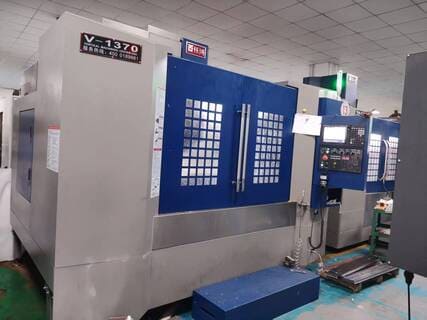
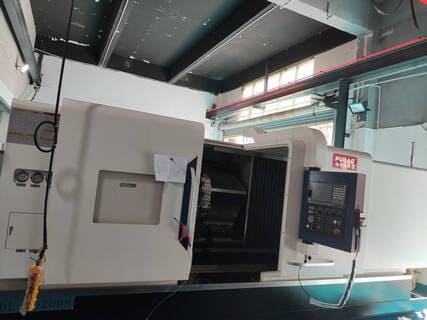
Achieved through high-end Japanese and German machining centres, with CMM verification on critical features.
We offer manufacturing services for your stainless steel parts, supporting turning and multi-axis machining. From drawing design to design feedback, we provide fast responses within two hours. Contact our professional engineers now and take the risk out of your next build.
Achieved through high-end Japanese and German machining centres, with CMM verification on critical features.
Standard machined finish is Ra 1.6 µm; electropolishing takes critical bores down to Ra 0.2 µm for medical work.
100% inspection protocols for critical features using automated OMM and CMM equipment, with mill certificates on every batch.
Select and understand the right stainless steel grade to reduce project development cost. All stock is held with mill certification and heat-number traceability.
Universal corrosion resistance
Marine & medical grade
High machinability standard
Precipitation hardened strength
Ferritic decorative finish
High hardness martensitic
Extreme chemical resistance
Ultra-high vacuum / semiconductor grade
Explore the prototype parts we have produced. With strong solution capabilities, we deliver high-quality precision stainless steel parts across a range of industries.
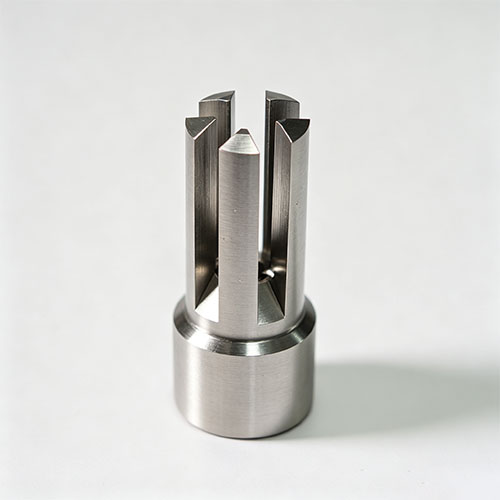
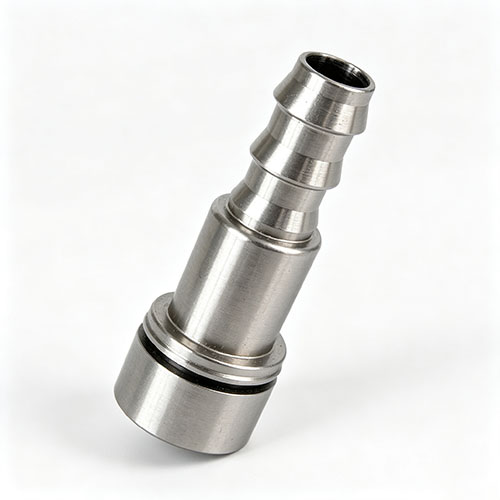
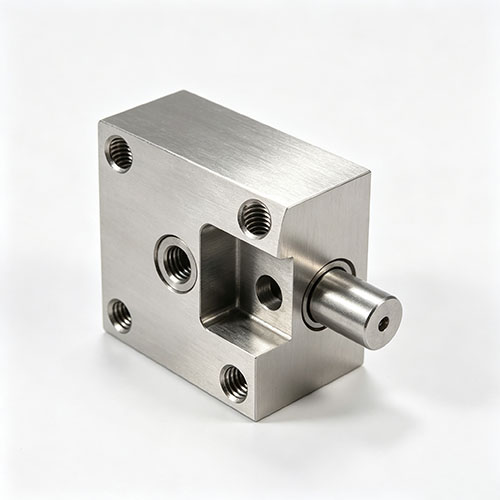
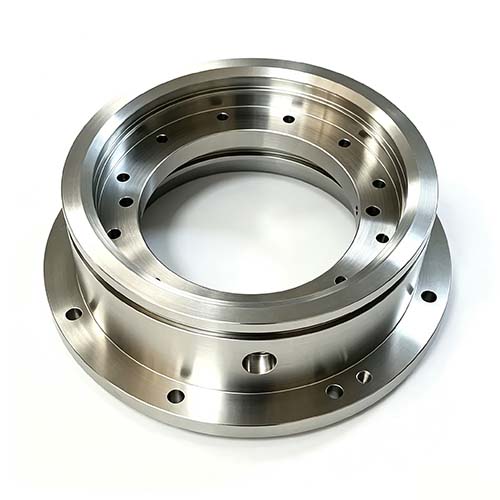
A complete manufacturing route for stainless steel components, from first cut to certified inspection.
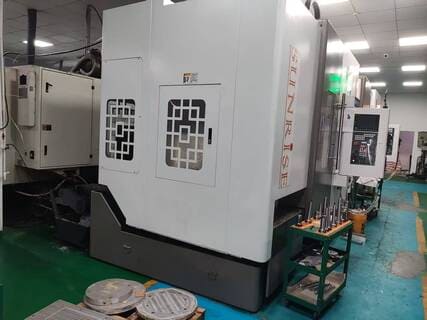
Multi-axis milling for complex geometries, cavities, contours and surface features. Our 3-, 4- and 5-axis machines handle parts of any complexity.
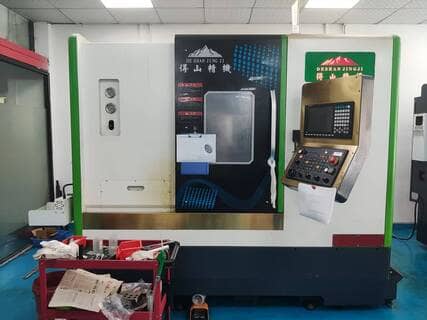
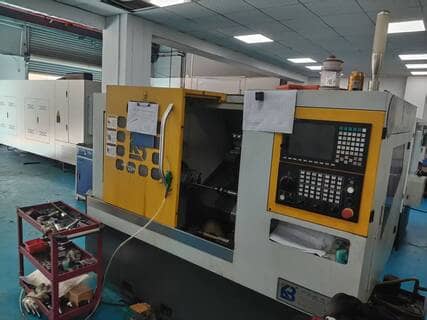
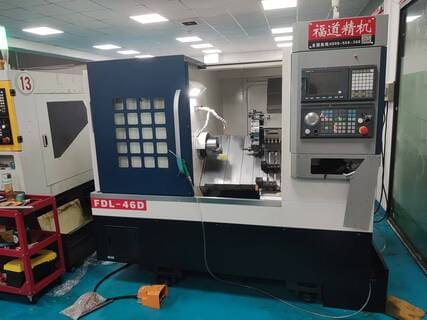
Precision lathes for rotational parts including shafts, bushings, connectors and fittings. Live tooling enables complex features in a single setup.
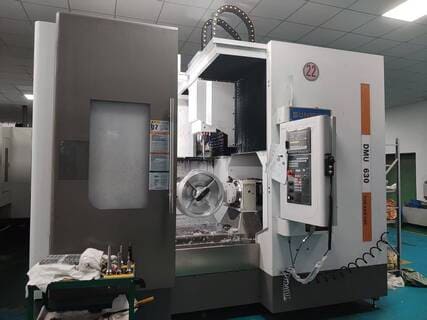
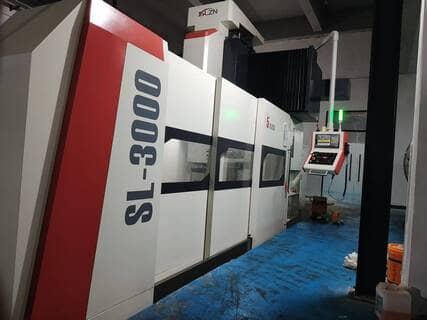
Full 5-axis simultaneous machining for the most complex geometries. Complete parts in a single setup, reducing handling and increasing accuracy.
Enhance the aesthetics, corrosion resistance and functional properties of your stainless steel parts with a range of post-machining finishes.
Rigorous quality control ensures every part meets your specifications and industry standards, from material verification to final dimensional checks.
Rapid Model is a supplier equipped with advanced machinery. Our factory delivers high-standard stainless steel parts for your most demanding projects.
| Stainless Grade | Category | Machinability | Corrosion Resistance | Hardness | Magnetic |
|---|---|---|---|---|---|
| 304 | Austenitic | ★★★☆☆ | ★★★★☆ | ★★☆☆☆ | No |
| 316L | Austenitic | ★★★☆☆ | ★★★★★ | ★★☆☆☆ | No |
| 303 | Austenitic | ★★★★★ | ★★★☆☆ | ★★☆☆☆ | No |
| 17-4 PH | P.H. Steel | ★★☆☆☆ | ★★★★☆ | ★★★★★ | Yes |
| 430 | Ferritic | ★★★★☆ | ★★★☆☆ | ★★★☆☆ | Yes |
| 420 | Martensitic | ★★★☆☆ | ★★☆☆☆ | ★★★★★ | Yes |
| 2205 | Duplex | ★★☆☆☆ | ★★★★★ | ★★★★☆ | Yes |
| Stainless Grade | Tensile Strength (MPa) | Hardness (HB / HRC) | Core Advantages |
|---|---|---|---|
| 304 / 316L | ≥ 515 | ~180 HB | Excellent formability and weldability; 316L offers superior pitting resistance. |
| 303 | ≥ 500 | ~190 HB | Free-machining grade designed for high-speed CNC production of nuts and bolts. |
| 17-4 PH | ≥ 1100 | 30 – 45 HRC | High strength-to-weight ratio. Maintains corrosion resistance while being heat treatable. |
| 2205 | ≥ 620 | ~290 HB | Double the strength of austenitic steels, with extreme resistance to stress corrosion cracking. |
| 420 / 430 | ≥ 450 – 700 | Up to 50 HRC (420) | 430 is for cost-effective decorative use; 420 is for high-hardness cutting tools. |
| Stainless Grade | Passivation | Electropolishing | Mirror Polishing | Best Use Case |
|---|---|---|---|---|
| 304 / 316L | Superior | Superior | Excellent | Medical devices & sanitary fittings |
| 303 | Good | Fair | Good | Precision turned hardware |
| 17-4 PH | Excellent | Good | Fair | Aerospace & valve components |
| 2205 | Excellent | Great | Fair | Chemical & marine industrial parts |
| 400 Series | Standard | Fair | Good | Home appliances & cutlery |
| Design Factor | General Spec | Precision Limit | Engineering Recommendation |
|---|---|---|---|
| Machining Allowance | +0.5 mm | +0.1 mm | Ensure enough depth of cut to stay below the work-hardened layer of 300-series steels. |
| Hole Depth | ≤ 3× dia | ≤ 5× dia | Peck drilling is mandatory for 316L and 2205 because of toughness and heat generation. |
| Thread Specs | 6H / 2B | 4H / 3B | Use roll taps for 304 / 316L to increase thread strength and tool life. |
Austenitic (304 / 316L / 303): Non-magnetic and highly corrosion resistant.
303 is the king of machinability, while 316L is the standard for marine and medical use.
Precipitation Hardening (17-4 PH): Combines the best of the 300 and 400 series.
High strength after aging treatment with excellent stability.
Duplex (2205): A mixed microstructure of austenite and ferrite. It provides
significantly higher strength and superior resistance to chloride-induced stress corrosion.
Martensitic & Ferritic (420 / 430): Magnetic steels. 420 is heat treatable to
high hardness (HRC 50+), while 430 offers good resistance to atmospheric corrosion at lower cost.
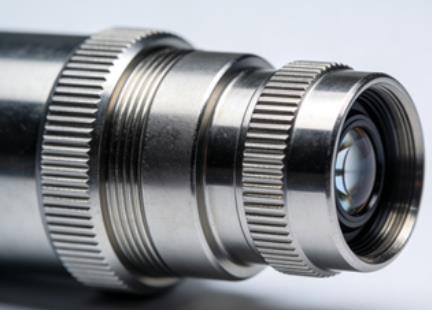
316L stainless steel is prone to severe work hardening. When machining 0.5 mm thin walls, tool pressure often causes part deflection and vibration. The internal cavities also needed a mirror finish (Ra 0.2 µm) to prevent bacterial adhesion, which is hard to achieve with standard cutting tools.
We used Swiss-type CNC lathes to provide maximum support near the cutting point, preventing deflection. Specialised cermet inserts with a high rake angle kept heat transfer out of the workpiece. Post-machining, a multi-stage electropolishing process reached the surgical-grade Ra 0.2 µm finish without altering critical dimensions.
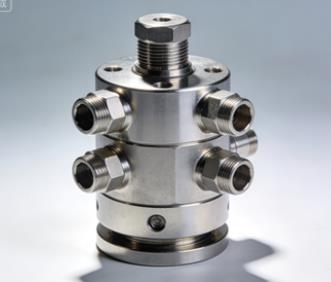
17-4 PH in the H1025 condition is highly abrasive, causing rapid tool wear and fluctuating dimensions. The main challenge was holding strict perpendicularity on deep internal bores while managing the high cutting forces needed to penetrate the hardened material without inducing micro-cracking.
We employed solid carbide drills with AlTiN coatings to handle the HRC 35+ hardness. A trochoidal milling strategy kept tool load constant on the external profiles. To guarantee zero distortion we ran a secondary stress-relief cycle between roughing and finishing, so the part stayed stable under extreme hydraulic pressure.
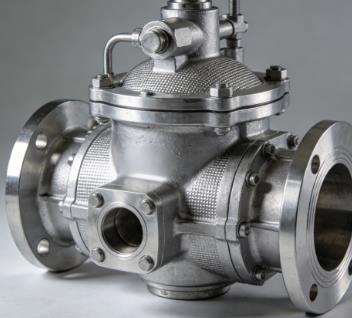
Duplex 2205 has double the yield strength of austenitic grades. Its high toughness makes chip breaking extremely difficult, often causing bird-nesting that damages the surface or breaks tools during internal threading. Managing heat dissipation in this low-conductivity material is also critical.
We used 70 bar high-pressure coolant through the tool to break chips instantly. For the large-diameter threads we ran a multi-pass custom threading cycle with chip-breaking pauses. Indexable inserts with a dedicated duplex geometry increased tool life by 40% while holding a consistent Ra 0.8 µm sealing surface.
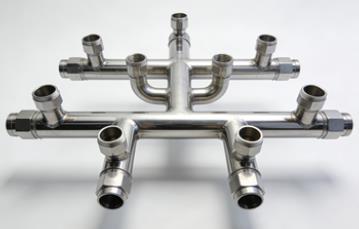
Semiconductor applications require ultra-high purity. Even the smallest burr or metallic contamination from a tool can ruin a vacuum chamber's performance. The manifold had complex internal cross-holes where manual deburring was impossible, yet every edge had to be radiused to prevent gas entrapment.
We used abrasive flow machining after CNC milling to deburr the internal intersections. All machining ran with oil-free synthetic coolant to prevent hydrocarbon contamination. The finished parts went through a 12-hour ultrasonic clean in a Class 1000 cleanroom before vacuum-sealed packaging.
Customer identity stays confidential, so instead of quoting named references we publish the figures our stainless steel programmes are managed against.
Electropolished bores for medical and sanitary work, measured on a calibrated surface tester.
Held on critical features across production batches, trended by SPC rather than sorted at the end.
Every batch ships with a mill certificate and heat number traceable back to the source.
Parts accepted at first inspection on stainless programmes, with non-conformances logged and root-caused.
Indicative tools for early budgeting. Final pricing always comes from an engineering review of your drawings.
Enter a value in any field to convert between scales (metric and imperial).
Get your parts to market faster with a streamlined, high-efficiency production process. We handle the complexity so you can focus on scaling your brand.
Upload STP or DXF files for instant pricing and a manufacturability analysis.
Our engineers refine the design for cost efficiency and production speed.
Advanced equipment and expert engineering, run to a locked process.
CMM verification and ISO 9001 standardised inspection protocols.
Surface finishing, assembly and global logistical dispatch.
303 is the free-machining grade and gives the best cycle time and finish, which makes it ideal for turned hardware and fittings. 304 is the general-purpose structural choice. 316L adds molybdenum for pitting resistance, so it is specified for medical, marine and food-contact parts. 17-4 PH is the choice when you need high strength after an aging treatment. 2205 duplex is for aggressive chemical and seawater service, and 420 / 430 cover high-hardness cutting tools and cost-effective decorative work respectively.
Two reasons: work hardening and poor heat conduction. Austenitic grades such as 304 and 316L harden rapidly under the cutting edge, so a tool that rubs instead of cutting will meet progressively harder material. Stainless also carries heat away slowly, so cutting temperature concentrates at the edge and accelerates tool wear. We manage this with sharp positive-geometry tooling, a depth of cut that stays below the hardened layer, generous flood coolant, and feed rates high enough to cut rather than rub.
Standard machined tolerance is ±0.025 mm, with precision features held to ±0.005 mm where the drawing requires it. As-machined finish is typically Ra 1.6 µm, and fine machining reaches Ra 0.8 µm. For medical and sanitary parts, multi-stage electropolishing takes bores down to Ra 0.2 µm, which also passivates the surface in the same operation.
Passivation to ASTM A967, electropolishing, bead blasting, brushed and mirror polishing, sandblasting, plus plating and coating where the application allows. Selection depends on corrosion resistance, cleanability, wear resistance and appearance. Passivation and electropolishing are the standard choices for medical, food and semiconductor parts because they remove free iron from the surface rather than covering it.
Yes. Every batch ships with a mill certificate (EN 10204 3.1 or equivalent) and heat-number traceability back to the source. Depending on your quality plan we also provide a First Article Inspection report, dimensional inspection reports, and CMM results for critical features. Third-party inspection or specific certification requirements should be flagged before quotation so the lead time can be confirmed.
Yes, and it is one of the more demanding things we do. Thin walls deflect under tool pressure and then spring back once released. We use Swiss-type lathes or supported setups to hold the work close to the cut, keep depth of cut light, choose insert geometry that minimises cutting force, and where required run an intermediate stress-relief stage between roughing and finishing. Wall thicknesses down to about 0.5 mm are achievable depending on diameter and length.
Prototypes and small batches typically run on a 3–7 working day cycle, and production quantities are confirmed against the volume and finishing route. Stainless machines more slowly than aluminum, so a part that would run in two days in 6061 may take three in 316L. We confirm the schedule with the quotation rather than after the order.
Yes. Stainless parts are frequently combined with sheet metal fabrication, welding, heat treatment and grinding to deliver a finished assembly rather than a single component. Keeping those routes with one supplier means the datum strategy carries through, which removes a whole class of fit problems that appear when each operation is quoted separately.
Upload your CAD files with tolerances, grade and finish requirements, and we will come back with pricing, lead time and free DFM feedback.